
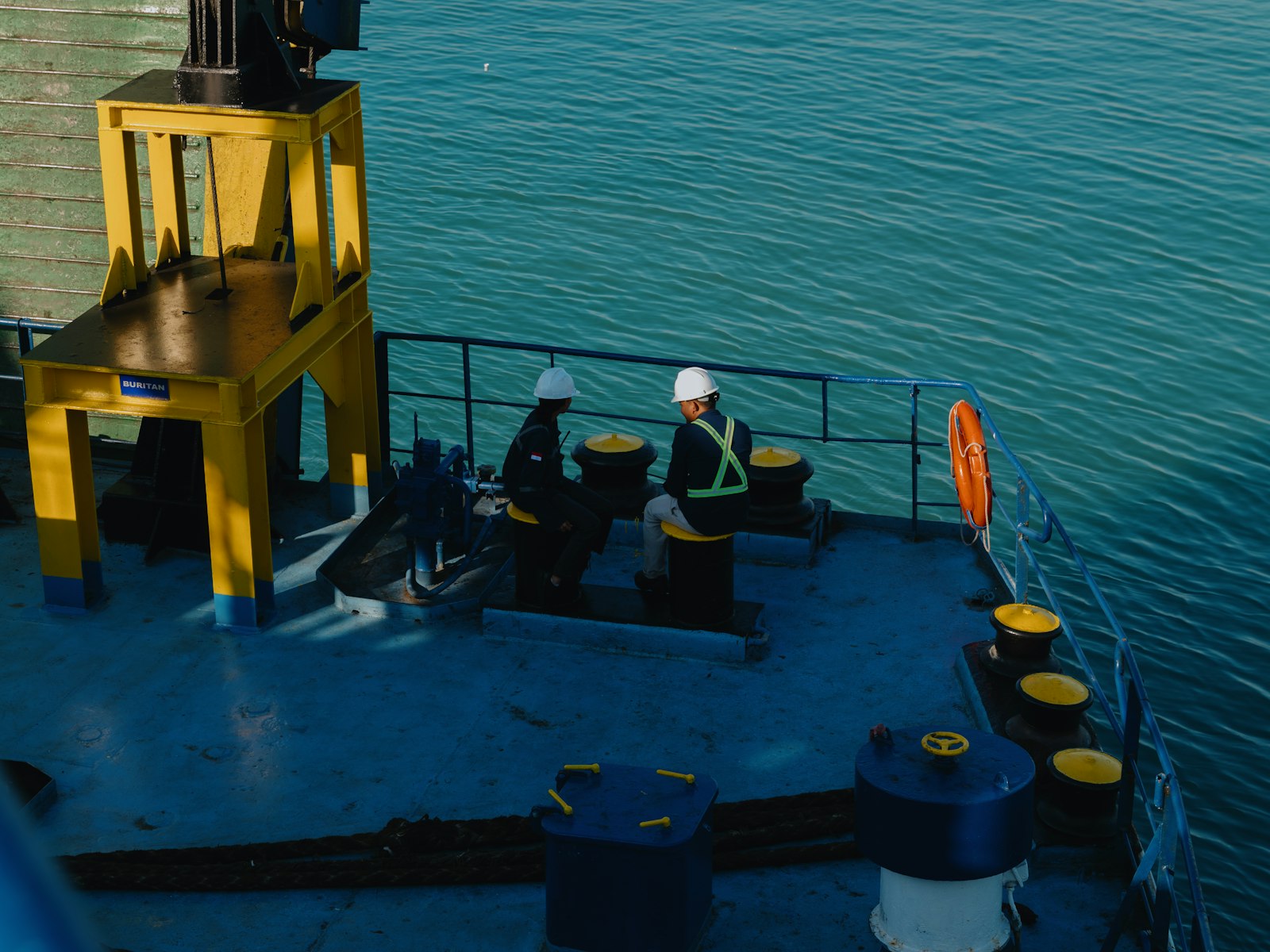
Services / Riding Technicians
Engineers with a bag packed.
When the work needs more time than the schedule allows, our engineers stay on board and sail with you. Survey underway, install underway, commission in the conditions the system will actually run in.
Port calls are short. Cargo comes first.
Every vessel IT project fights the same enemy: the schedule. The vessel is never in the right place for long enough, so work gets squeezed into turnarounds, half finished, and patched on the next call. Two years later somebody is paying to unpick it.
We built the company around the obvious answer nobody offers: if the vessel cannot stay for the work, the engineer sails with the vessel.
Most technology companies stop at the gangway. We have a bag packed.
Jobs that cannot be finished alongside.
Network surveys underway
A survey squeezed into six hours between a discharge and a departure is a survey done badly. Underway, we measure the vessel as it actually operates.
Installations that outlast a port call
Cabling, racks, access points and onboard systems built without racing the cargo plan.
Commissioning under real conditions
Steel decks, real crew load, real satellite link, real weather. By the time we step off, it has been tested by the sea.
Newbuild deliveries and repositioning voyages
IT and network work completed during the voyage the vessel is making anyway, arriving ready to trade.
Cyber asset inventories
The boots-on-deck inventory work that IACS UR E26 and ISM cyber management depend on, done thoroughly because there is time to do it thoroughly.
What this means in practice.
Riding assignments are normal marine work, run the way your SMS expects.
The result is simple: one voyage, one finished job, commissioned in service instead of promised in port. Read how this changes a Wi-Fi survey in our survey methodology guide.
No rushed installs.
The work sets the timeline, not the tide. A job that needs three days gets three days, underway.
Real-world commissioning.
Systems tested with the crew aboard and the vessel working, not an empty ship alongside.
Sea trial support.
We can be aboard for trials, hand-over and first voyages, when new systems misbehave and nobody else is there to fix them.
Crew handover.
Your ETO or master learns the system from the person who built it, on board, on the actual equipment.
We work under your rules.
Our technicians sail as riding service personnel, under the master's authority and your ISM procedures. We are used to it.
Next step
Tell us where the vessel is going.
Describe the job and the trading pattern, and we will tell you honestly whether a riding assignment is the right answer, what it would take, and what it would cost.
Do your engineers really sail with the vessel?
Yes. When the work needs more time than a port call allows, our engineer joins the vessel and completes the job underway. It is often faster and always better than trying to squeeze the work into a turnaround.
Under what terms do they come aboard?
As riding service personnel, under the master's authority and your ISM procedures, with the documentation your SMS requires agreed before boarding.
Where can they join and leave?
Wherever works for the schedule: the port call before the work, the port call after it, or a longer leg when the job needs it. We plan embarkation around your trading pattern, not ours.
What work is done underway?
Network surveys, installations, commissioning, onboard IT builds, cyber asset inventories and crew handover. We do not touch type-approved navigation and safety equipment; that stays the maker's domain.
Is this expensive?
It is usually cheaper than the alternative: repeated port-call visits that never quite finish the job, or an install commissioned in a rush that fails in service. One voyage, one finished job.